New book:

The Perks of Being a Bookworm. The Science of the Benefits of Reading

Published 7 May 2026 by Cambridge University Press.
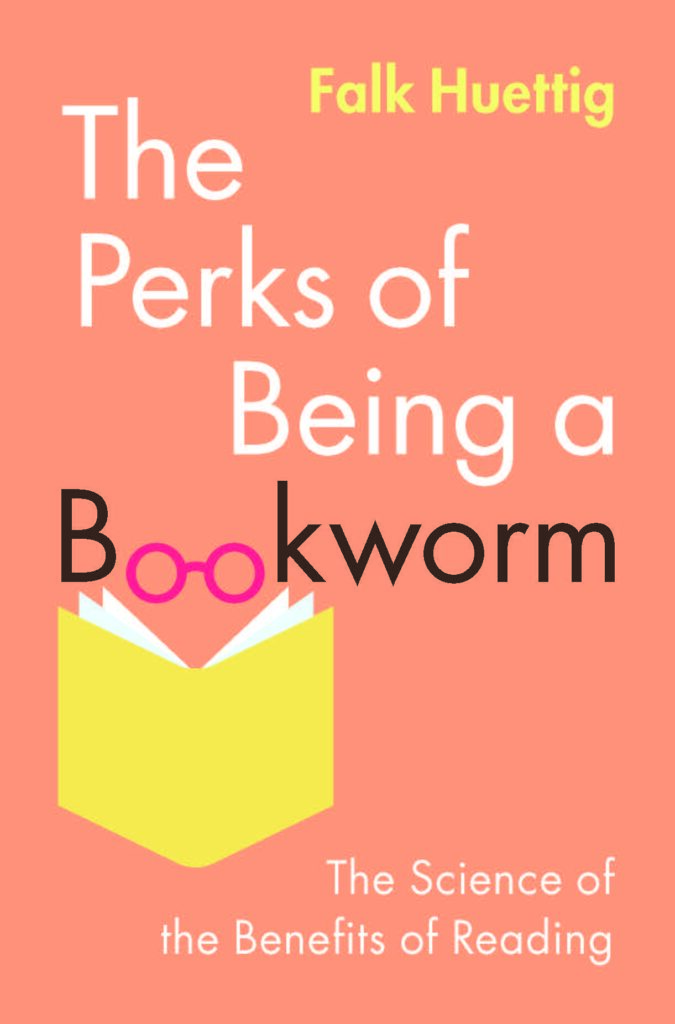
Available via the Cambridge University Press website and the bookstore of your choice.
Max Planck Institute news feature about book release
Featured and discussed in The Guardian Science Weekly podcast
Max Planck news about Süddeutsche Zeitung interview
*** Available in Polish soon ***
Reviews and endorsements:
By skilfully blending observations from the past with state-of-the-art science, Huettig reminds us that reading is an epic achievement, and one that changes brains and minds, cultures and societies. Thoughtful, engaging, and a must read for all those who think about the gift of reading and who wonder, like Huettig, what the future for literacy might be. Kate Nation, University of Oxford
For the first time the various ways in which reading benefits the development of cognitive skills, including some unexpected ones such as face recognition, are brought together in such a comprehensible and authoritative way by one of the main players in this research field. Also, it is fun to read. Denis Drieghe, University of Southampton
What are the benefits of being literate and engaging in reading? As it turns out, there are many! Huettig provides a compelling and comprehensive review of these benefits, underscoring the importance of literacy and reading education. This book is a must for anyone interested in education or cognitive science. Erik D. Reichle, author of Computational Models of Reading
This book is a highly original essay on the science of reading, clearly distinguishing itself from the classic texts on the topic. I congratulate the author for having undertaken such a daunting task and having done so with great success while adopting an accessible and engaging style of writing. Jonathan Grainger, CNRS & Aix-Marseille University
Dr. Huettig catalogues the tectonic shift in world history triggered by the invention of the printing press and the spread of literacy. Then he deftly refocuses his lens from theways literacy transformed the world to how literacy transforms individuals, specifically, by enhancing their brains. This is a must-read for everyone invested in advancing literacy and opposing the onset of a “post-literate” world. Kiel Christianson, University of Illinois, Urbana-Champaign
Previous book:
Looking Ahead. The New Science of the Predictive Mind
Published 6 March 2025 by Cambridge University Press.
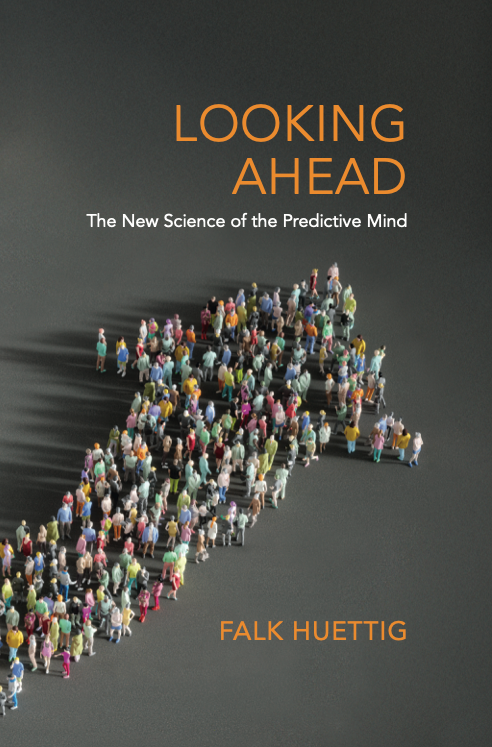
Available via the Cambridge University Press website and the bookstore of your choice.
*** Available in Korean soon ***
Reviews and endorsements:
Looking Ahead uncovers the science behind our use of prediction to make decisions and navigate the complex world. Huettig offers original, evidence-based analyses of this capacity, emphasizing the historical context and scientific validity of the concepts. A must-read for anyone curious about the origins and widespread influence of the concept of intelligent systems as prediction engines. Fernanda Ferreira, University of California, Davis
Many researchers argue that prediction presents a foundational, unifying principle to the understanding of the mind. Huettig has written an accessible yet sophisticated introduction to this fascinating topic, which moves seamlessly through philosophical, experimental, and computational issues that relate prediction to mind and brain. Martin Pickering, The University of Edinburgh
Huettig plainly explains why the brain is now being treated as a prediction system instead of an information processor. The difference may seem subtle, but across 24 bite-size chapters, Huettig demonstrates that it is nothing short of revolutionary. I predict that both students and experts will absorb powerful insights from Looking Ahead. Michael J. Spivey, University of California, Merced
The notion of prediction has played an increasing role in contemporary psychological, neuroscientific, and mathematical theories of the mind and the brain. In Looking Ahead, Falk Huettig has created a comprehensive theory of these theories, the strengths, and their weaknesses. It will be a valuable resource for researchers who care about the Big Picture. Ray Jackendoff, Tufts University
Decades of research into the human mind have resulted in myriad different perspectives on the workings of that mind: Falk Huettig provides the reader with a sophisticated yet accessible tour of those different perspectives through the lens of prediction Looking Ahead the ability to use information from the past or present in service of accessing information about the future. Few books, if any, capture the range of phenomena, and associated disciplines, that are captured here. Both novice and expert will benefit from Huettig’s ability to engage and guide the reader through such varied intellectual terrain. This should be on every cognitive scientist’s list of essential reading. Gerry Altmann, University of Connecticut